
When it comes to remodeling your kitchen or bathroom, the material inside your cabinets matters just as much as the style on the outside. If you’re weighing the pros and cons of plywood vs particle board cabinets, you’re not alone. Understanding the difference in cabinet box construction is one of the smartest ways to protect your investment—ensuring your space looks great and performs for years to come.
In this guide, we’ll break down how cabinet box materials affect strength, moisture resistance, and long-term durability—and why RTA Cabinet Store only uses all plywood construction in every cabinet we sell (no upgrade required).
Why Cabinet Box Material Matters
Think of the cabinet box as the skeleton of your kitchen. It supports the countertop, hardware, doors, and drawers—so if the box fails, everything else goes with it. That’s why cabinet box material is a top consideration for both first-time remodelers and seasoned trade professionals.
Here’s how all plywood and particle board construction compare when it comes to what matters most: strength, longevity, and value.
What Is All Plywood Cabinet Construction?
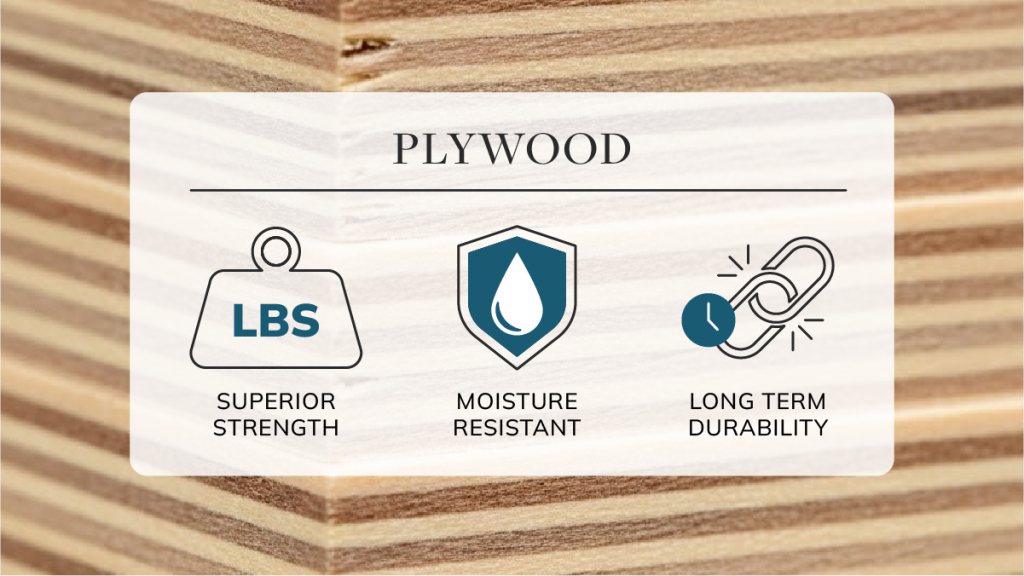
All plywood cabinet boxes are made from layers of real wood veneer glued together with alternating grain directions. This layered design provides:
- Superior strength and screw-holding power – perfect for mounting on walls and supporting heavy countertops.
- Moisture resistance – plywood resists swelling and warping when exposed to humidity, making it ideal for kitchens and bathrooms.
- Long-term durability – reduces sagging and structural failure over time, even under daily use.
At RTA Cabinet Store, all cabinets come standard with all-plywood construction—giving you premium performance without the premium price tag.
What Is Particle Board Cabinet Construction?
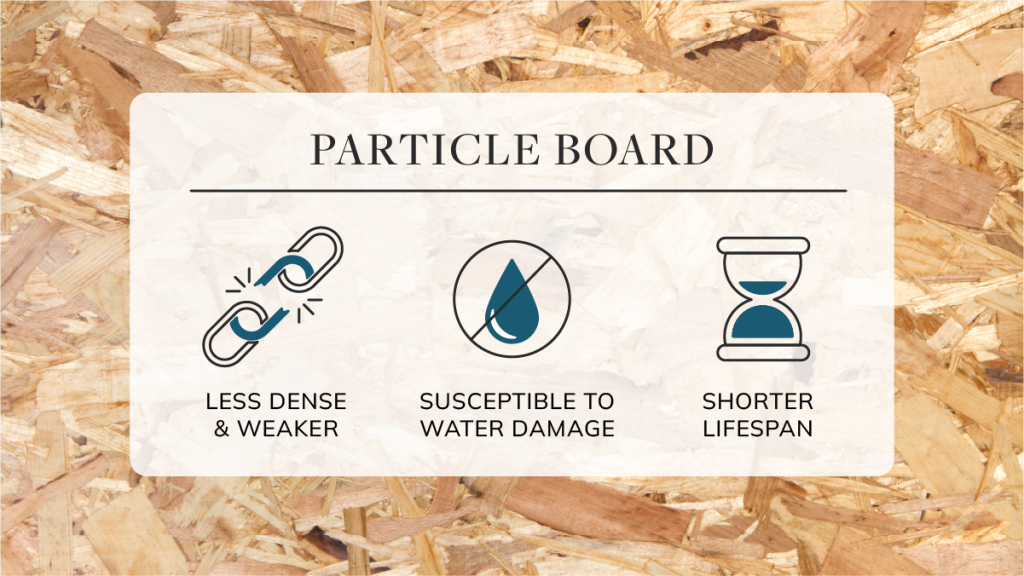
Particle board is made from compressed wood chips and resin. While it’s often used in budget cabinetry, it has serious downsides:
- Weaker and less dense – prone to splitting and can’t hold screws securely.
- Highly susceptible to water damage – swelling and quicker deterioration with exposure to moisture.
- Shorter lifespan – more likely to sag or break under everyday use.
While particle board may reduce upfront costs, it often leads to faster wear—and needed replacements. That’s why many homeowners and professionals choose to avoid it entirely for kitchen and bath projects.
Why Choose All Plywood RTA Cabinets?
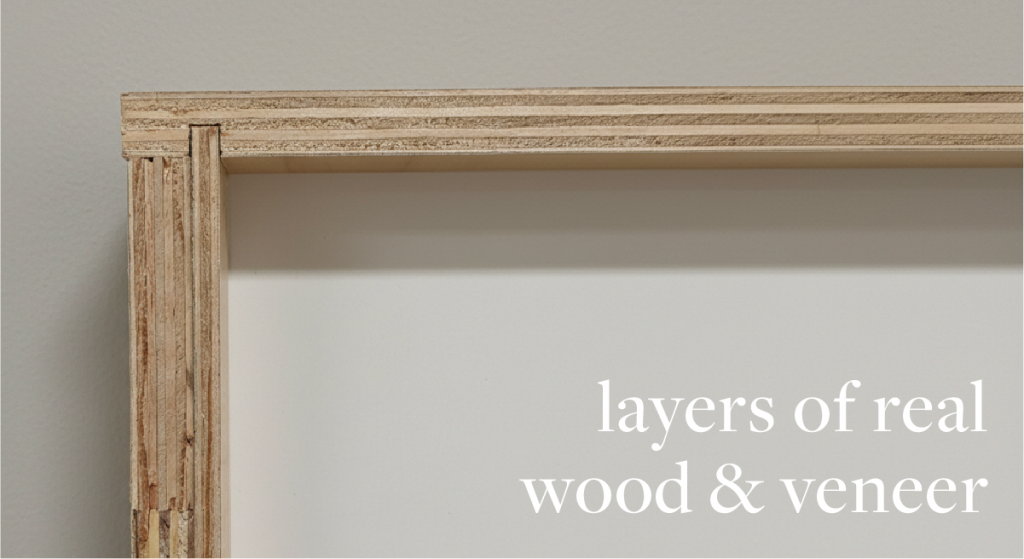
At RTA Cabinet Store, we never compromise on construction quality. All our cabinet boxes feature furniture-grade plywood, giving you the durability of custom cabinetry at a fraction of the cost.
You won’t need to upgrade or pay extra. All plywood construction is our standard, not a luxury feature. Whether you’re a DIYer installing your own kitchen or a trade professional managing a project, you can trust that you’re getting a product that performs.
Benefits at a glance:
✅ Holds up better over time
✅ Ideal for humid environments
✅ Withstands the demands of daily use
✅ Easy to assemble, easier to trust
Invest in Cabinets That Last
Whether you’re designing your forever kitchen or upgrading a flip, choosing cabinets built with all plywood construction means fewer problems down the road and more value for your budget.
FAQs: All Plywood vs Particle Board Cabinets
Is plywood really better for cabinets?
Yes. Plywood is stronger, more water-resistant, and holds screws better than particle board—making it ideal for both base and wall cabinets.
Do all RTA cabinets use plywood?
Not all RTA cabinet brands do—but RTA Cabinet Store does. All of our cabinets use all plywood construction as a standard feature.
Is particle board ever okay to use?
It may be fine in dry, low-use areas or temporary builds, but it lacks the strength and durability required for kitchen and bathroom installations.