
If you’re planning a kitchen update, you’ve probably already figured out that flooring goes down before cabinets go in. But backsplash timing trips up almost as many people — and the answer changes depending on whether you’re doing a full remodel or just swapping out cabinets while keeping everything else in place.
Here’s how to get the order right either way.
TL;DR
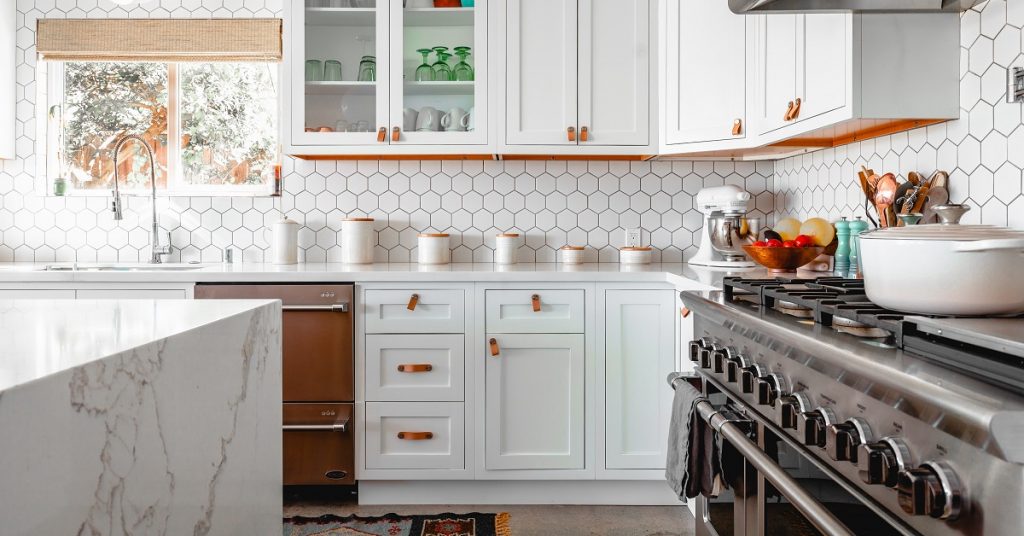
Full remodel: Cabinets first, then countertop, then backsplash. The backsplash is installed last so it can be measured and cut to fit the actual gap between your finished countertop and the underside of your wall cabinets.
Replacing cabinets only (keeping your existing backsplash): You’re not re-sequencing anything — but you do need to check that your new cabinets will land at the same height and depth as the old ones, or your existing backsplash may not line up anymore. More on that below.
The Standard Order for a Full Remodel
If you’re gutting the kitchen and starting over, the order is:
- Flooring (unless it’s a floating floor — see our flooring vs. cabinets guide for exceptions)
- Cabinets — base and wall cabinets go in first
- Countertops — measured and templated once cabinets are installed and leveled
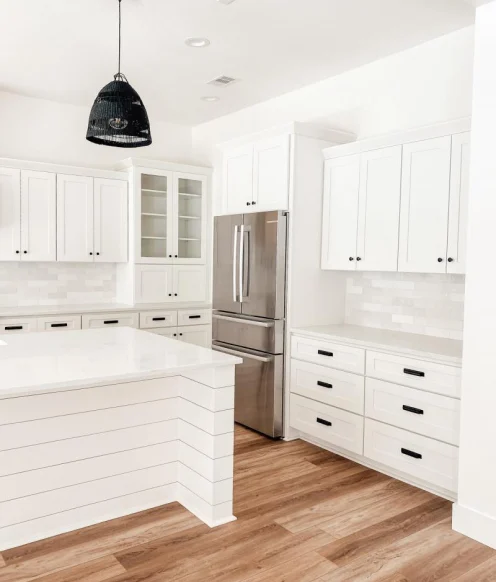
- Backsplash — installed last, cut to fit the exact gap left between the countertop and the bottom of the wall cabinets
The reason backsplash goes dead last is simple: it’s the one element that has to fit a gap defined by two other finished surfaces. Countertops aren’t perfectly level from a factory spec — they’re set and leveled on site. Cabinet height can vary by a fraction of an inch depending on how they were shimmed. If you tiled the backsplash before the countertop went in, you’d be guessing at that gap, and guessing wrong means either a visible seam or cutting into finished tile after the fact.
The Exception Nobody Talks About: Replacing Cabinets, Keeping the Backsplash
This is the scenario a lot of remodel-sequencing guides skip — and it’s a common one for anyone doing a cabinet refresh rather than a full gut renovation.
If your countertop and backsplash are staying put and you’re only replacing the cabinet boxes, here’s what to check before you order:
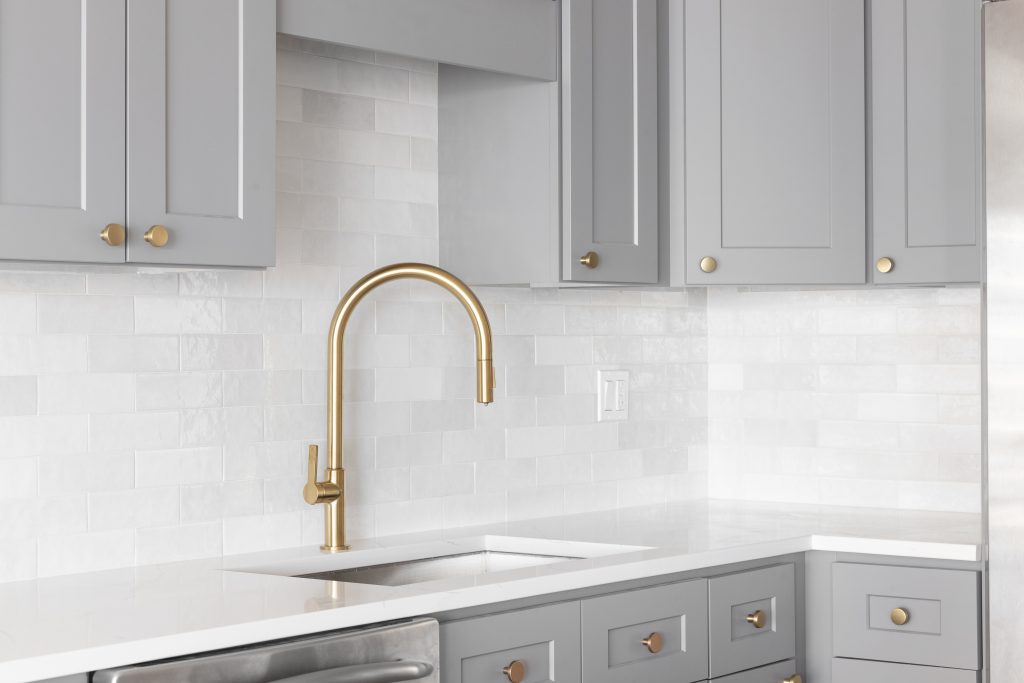
1. Match your wall cabinet height to the old ones. If your existing backsplash runs from the countertop up to the bottom of the old wall cabinets, your new wall cabinets need to sit at that same height — or close to it. A new cabinet line with a different standard height can leave you with either an ugly reveal gap above the tile or, worse, wall cabinets that now overlap your backsplash.
2. Check your base cabinet depth. Countertop overhang is calculated based on standard base cabinet depth (usually 24″). If your new base cabinets are shallower or deeper than what you had, your existing countertop and backsplash may no longer line up cleanly with the cabinet face below.
3. Protect the backsplash during removal. Old cabinets are often screwed directly into studs behind (or very close to) the backsplash tile. Removing them without care can crack tile, especially near grout lines or at the corners where cabinets meet the wall. Score along the caulk line between the old cabinet and the backsplash before removal, and back screws out slowly rather than prying.
4. Plan for a small gap either way. Even with careful measuring, it’s common to end up with a small reveal between the new cabinet and the existing backsplash. A scribe strip, filler piece, or a bead of color-matched caulk can close that gap cleanly — build this into your plan rather than treating it as a surprise.
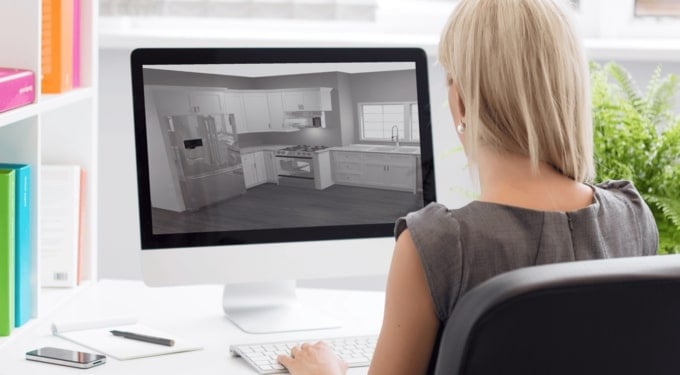
If your new cabinets are a significantly different height or depth than your old ones, it may be worth budgeting for a partial backsplash redo rather than fighting a mismatch. Our free kitchen design service can help you check this against your existing measurements before you order.
Quick Reference
| Scenario | Order |
|---|---|
| Full kitchen remodel | Flooring → Cabinets → Countertop → Backsplash |
| Cabinets + countertop, keeping flooring | Cabinets → Countertop → Backsplash |
| Cabinets only, keeping countertop and backsplash | Check height/depth match first, then swap cabinets |
| Backsplash refresh only, keeping cabinets | Backsplash can go any time — no cabinet dependency |
FAQ
Do I need to remove my backsplash to replace my cabinets? Not usually. If your new cabinets are a close match in height and depth to your old ones, you can typically leave the backsplash in place and simply reinstall around it.
What if my new cabinets sit slightly lower than my old ones? You’ll likely see a strip of exposed wall or old adhesive residue between the top of the new cabinet and the bottom of the backsplash. A small trim piece or matching paint touch-up usually resolves this without redoing the tile.
Should backsplash go up before or after the countertop? After. The countertop needs to be installed and leveled first so the backsplash can be cut to the actual gap, not a projected one.
Can I install backsplash before cabinets to save time? It’s not recommended for a full remodel. You risk a visible gap or misalignment once the cabinets and countertop are in, since backsplash height is dependent on both.
Planning a cabinet-only refresh and want to make sure your new line matches your existing kitchen’s dimensions? Order a sample or get free design help from our team before you buy.